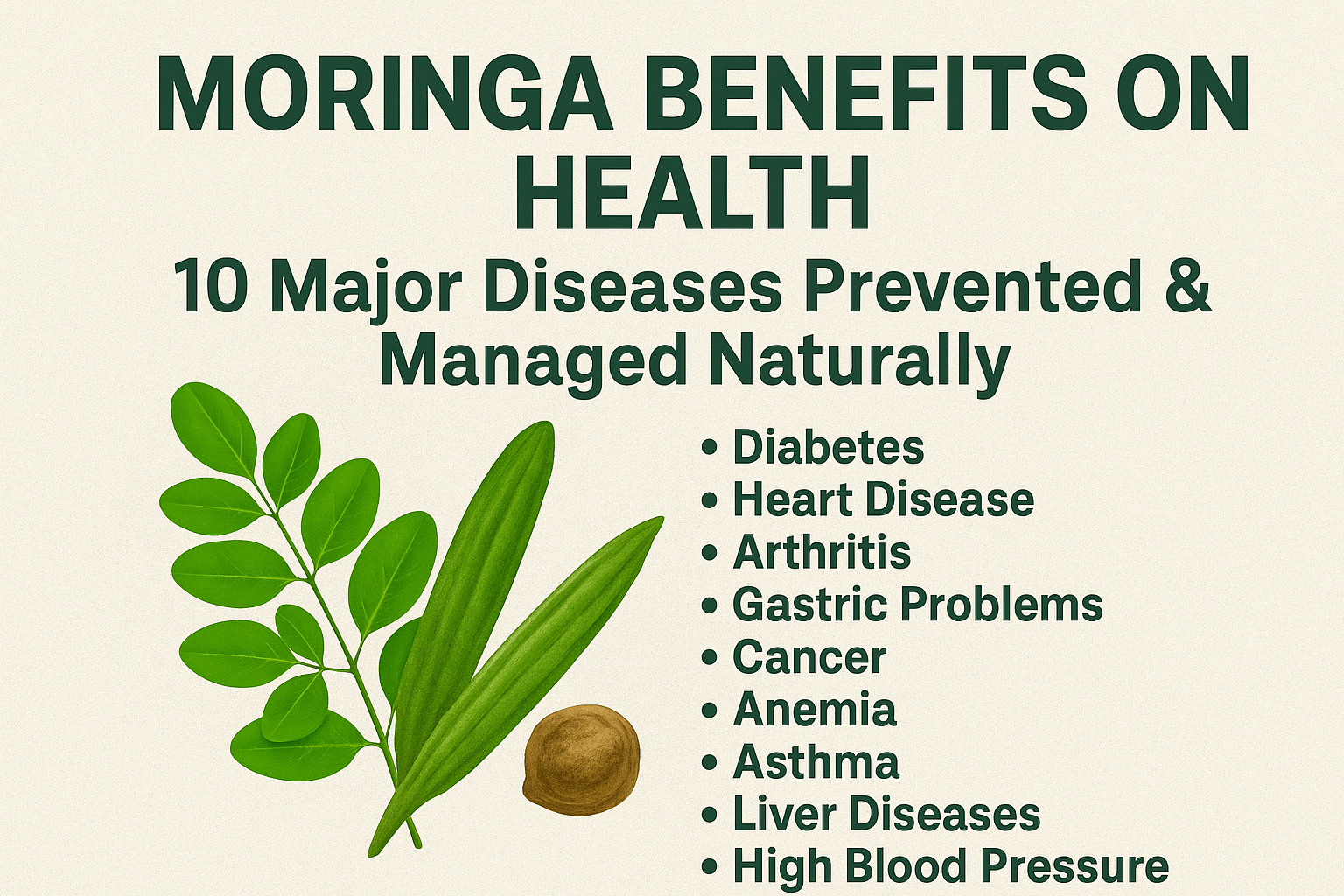
Introduction: Why Moringa Is Called the “Miracle Tree”
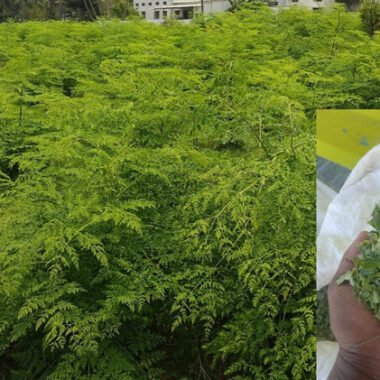
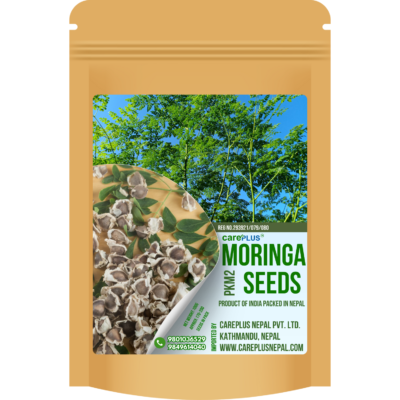
Moringa (Moringa oleifera), often referred to as the “Miracle Tree” or “Tree of Life”, is one of the most nutrient-dense plants on Earth. Used for centuries in Ayurveda, Unani, and traditional medicine systems, Moringa leaves, pods, seeds, and powder are rich in vitamins, minerals, antioxidants, amino acids, and anti-inflammatory compounds.
Modern scientific research has validated many traditional claims, showing that Moringa plays a crucial role in preventing, managing, and supporting treatment of multiple chronic and lifestyle-related diseases.
In this article, we explore 10 major diseases and explain how Moringa helps in prevention, management, and recovery.
1. Diabetes (Type 2 & Prediabetes)
Role of Moringa in Diabetes
Moringa is highly effective in regulating blood sugar levels due to its rich content of:
- Isothiocyanates
- Chlorogenic acid
- Quercetin
- Fiber
These compounds slow down sugar absorption, improve insulin sensitivity, and reduce post-meal glucose spikes.
Health Benefits
- Lowers fasting and postprandial blood sugar
- Improves insulin function
- Reduces oxidative stress in pancreatic cells
How to Use
- 1–2 teaspoons Moringa powder daily with warm water
- Moringa tea before meals
2. Heart Disease & High Blood Pressure
Role of Moringa in Heart Health
Moringa supports cardiovascular health by:
- Lowering LDL (bad cholesterol)
- Increasing HDL (good cholesterol)
- Improving blood vessel function
Its potassium, magnesium, and antioxidants help maintain healthy blood pressure and circulation.
Health Benefits
- Reduces cholesterol levels
- Prevents plaque formation in arteries
- Supports healthy blood pressure
- Reduces risk of heart attack and stroke
3. Gastric Problems, Acidity & Digestive Disorders
Role of Moringa in Digestive Health
Moringa has natural anti-ulcer, anti-bacterial, and anti-inflammatory properties, making it highly beneficial for:
- Gastritis
- Acid reflux
- Indigestion
- Constipation
Health Benefits
- Protects stomach lining
- Reduces acid secretion
- Improves gut movement
- Supports healthy digestion
4. Arthritis, Joint Pain & Inflammation
Role of Moringa in Arthritis
Chronic inflammation is the main cause of arthritis and joint pain. Moringa contains:
- Polyphenols
- Flavonoids
- Anti-inflammatory enzymes
These compounds reduce swelling, stiffness, and pain naturally.
Health Benefits
- Reduces joint inflammation
- Improves flexibility
- Decreases pain and stiffness
- Supports cartilage health
5. Weak Immunity & Frequent Infections
Role of Moringa in Immune System Strengthening
Moringa is rich in:
- Vitamin C
- Vitamin A
- Zinc
- Iron
These nutrients strengthen immune defense, improve white blood cell function, and protect against infections.
Health Benefits
- Boosts natural immunity
- Reduces frequency of colds, flu, and infections
- Supports faster recovery
6. Anemia & Iron Deficiency
Role of Moringa in Anemia
Moringa leaves contain more iron than spinach, along with vitamin C that enhances iron absorption.
Health Benefits
- Increases hemoglobin levels
- Improves energy and stamina
- Reduces fatigue and weakness
- Beneficial for women, children, and elderly
7. Liver Disorders & Detoxification
Role of Moringa in Liver Health
The liver plays a key role in detoxification. Moringa helps by:
- Reducing liver inflammation
- Protecting liver cells from toxins
- Enhancing detox enzyme activity
Health Benefits
- Supports liver regeneration
- Improves fatty liver condition
- Helps detox heavy metals and chemicals
8. Obesity & Weight Management
Role of Moringa in Weight Loss
Moringa is low in calories but high in nutrients and fiber. It:
- Controls appetite
- Improves metabolism
- Balances blood sugar (reducing fat storage)
Health Benefits
- Supports healthy weight loss
- Reduces belly fat
- Improves metabolic health
9. Skin Diseases & Premature Aging
Role of Moringa in Skin Health
Moringa contains:
- Vitamin E
- Vitamin A
- Antioxidants
- Omega fatty acids
These nutrients protect the skin from oxidative damage and support repair.
Health Benefits
- Reduces acne, eczema, and skin inflammation
- Slows aging and wrinkles
- Improves skin glow and elasticity
- Promotes wound healing
10. Cancer Risk Reduction (Supportive Role)
Role of Moringa in Cancer Prevention
While not a cure, Moringa has shown anti-cancer potential in research studies due to:
- Powerful antioxidants
- Anti-proliferative compounds
- Immune-modulating effects
Health Benefits
- Neutralizes free radicals
- Supports healthy cell function
- Reduces inflammation linked to cancer development
Nutritional Power of Moringa (Per 100g Dried Leaves)
- Calcium: 2000+ mg
- Iron: 28 mg
- Protein: 27 g
- Vitamin C: 17x more than oranges
- Vitamin A: 10x more than carrots
Best Ways to Consume Moringa
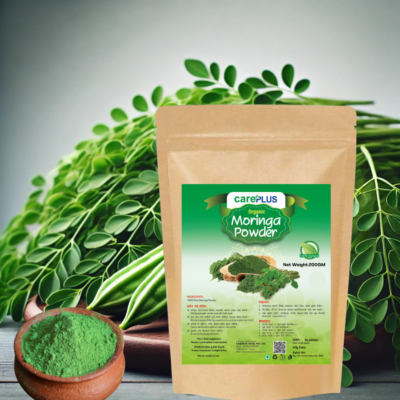
- Moringa Powder – Mix in water, smoothie, or food
- Moringa Capsules – Convenient daily dose
- Moringa Tea – Gentle detox and digestion support
- Fresh Moringa Leaves – Cooked as vegetables
Dosage & Safety
- General dosage: 2–5 grams per day
- Start with small amounts
- Pregnant women should consult a healthcare provider
- Choose organic, pesticide-free Moringa
Conclusion: Moringa – A Natural Solution for Modern Diseases
Moringa is not just a supplement; it is a complete natural health solution. From diabetes and heart disease to digestive disorders, immunity, anemia, and inflammation, Moringa offers broad-spectrum health benefits backed by tradition and science.
Incorporating Moringa into your daily routine can help prevent disease, improve vitality, and support long-term wellness naturally.